
Launching your B2B SaaS from Singapore? Here's the full guide (w. Scorecards and Metrics)

Crafting An Optimal SaaS Go-To-Market Plan for Singapore B2B Success
Developing a tailored go-to-market plan is key for Singapore B2B SaaS firms launching new products successfully into the market.
For Singapore small and medium enterprises (SMEs) introducing business-focused software solutions, having a strategic go-to-market (GTM) roadmap tailored to local market nuances can make all the difference in cutting through noise to achieve product-market fit.
This comprehensive guide will explore the key components that Singapore-based B2B SaaS providers need to craft targeted GTM blueprints to win customers ahead of regional and global rivals.
📑 Before moving on, we recommend you to bookmark this page, you never know when you need to revisit it again!
Understanding The Key Scorecards for B2B SaaS Success
For Singapore B2B SaaS companies with bold ambitions of securing funding, finding product-market fit and ultimately dominating their niche, this comprehensive guide distills battle-tested advice from the world’s leading practitioners.
Within these actionable pages, you’ll discover:
- Proven scorecards and milestones expected by investors like Garry Tan of Initialized Capital/Y Combinator at each fundraising stage
- Playbooks leveraged by blitzscaling startups like Data Dog, workday and Airtable, on architecting high-velocity sales engines
- Forward-looking guidance from Singapore government agencies on available grants to fuel R&D and global expansion
Equipped with insights from the biggest minds in B2B building, this definitive guide serves as your blueprint to transform from promising upstart to a globally revered organization - hats off to you for taking the first step towards your epic journey!
Scorecards inspirations, for those looking for benchmark metrics
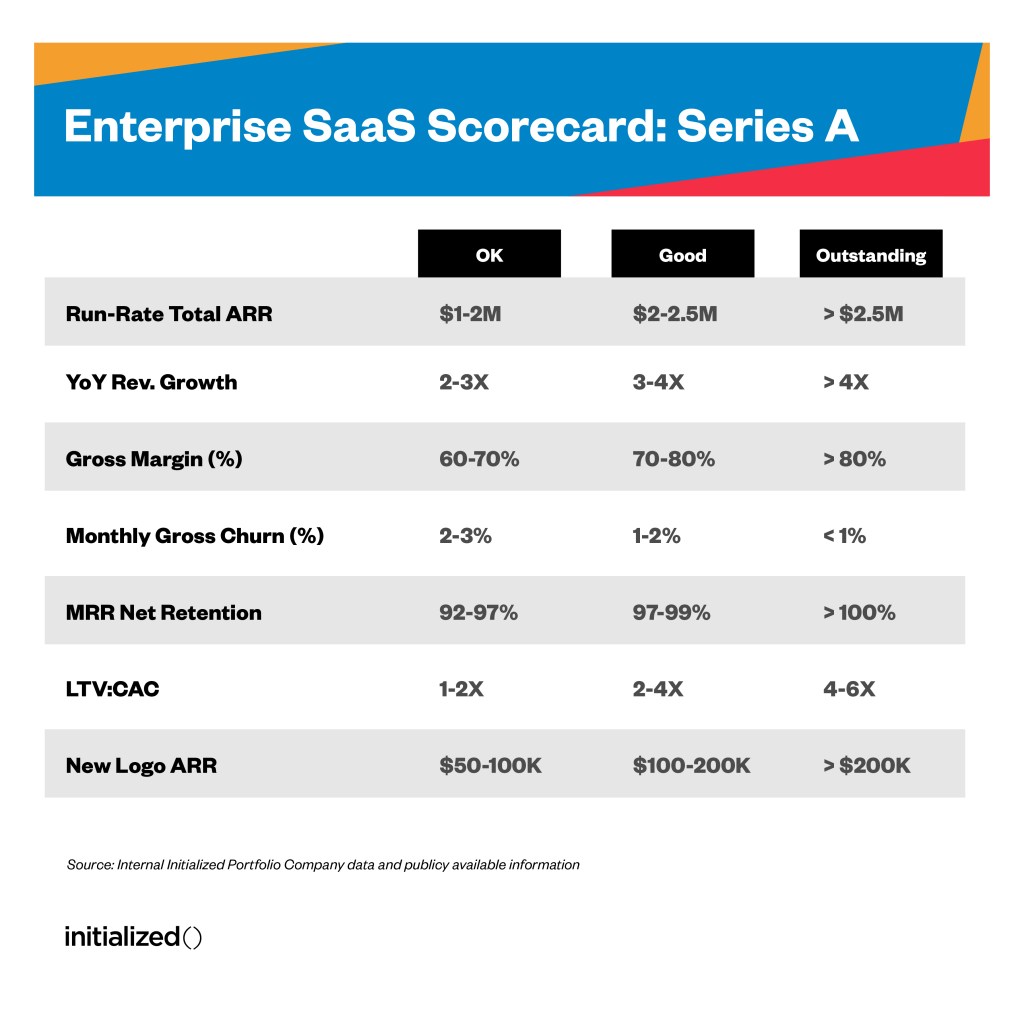

Quick Glossary Guide for those looking to quickly digest other key metrics for SaaS Businesses
We've provided other guides to help you digest the metrics so you'll be able to quickly validate what "Product-Market-fit" means to you eventually
Run-rate total ARR
Total annual recurring revenue based on current month's contracted business
Example: If monthly recurring revenue (MRR) in Jan is $100K, run-rate ARR = $100K * 12 = $1.2M
YoY Revenue Growth
Percentage increase in total revenue compared to previous year
Example: 2023 revenue of $2M vs 2022 revenue of $1M = 100% revenue growth
Gross Margin (%)
Total revenue minus cost of goods sold, divided by total revenue
Example: $1M revenue - $200K COGS = $800K gross profit ÷ $1M revenue = 80% gross margin
Monthly Gross Churn (%)
Percentage of recurring revenue lost in a month due to cancellations or downgrading
Example: Jan MRR is $100K. Feb MRR is $90K after $10K churn. Churn = $10K/$100K = 10%
MRR Net Retention
Total increase in recurring revenue from existing customers over time period
Example: 120% net retention means existing customer MRR increased by 20% in 1 year
LTV:CAC Ratio
Lifetime value of a customer divided by cost of acquiring each customer
Example: 3x ratio means a customer's lifetime value is $3k and CAC is $1k
New Logo ARR
Total annual recurring revenue from new customers in given time period
Example: Added 50 new customers in Jan at $2k ARR each = $100k new logo ARR
MRR
Total monthly recurring revenue at a given point
Example: MRR of $100K means recurring subscription revenue for Jan totals $100K
Growth Rate
Percentage increase in key metric like revenue over defined time period
Example: Grew revenue from $1.2M to $2M in 2024 for 67% YoY growth
Churn Rate
Percentage of recurring revenue lost due to cancellations or downgrades in time period
Example: Lost $10K MRR out of $100K totals 10% monthly churn
CAC Payback Period
Number of months to recover CAC through a customer's lifetime revenue contribution
Example: 15 month payback period means it takes 15 months of subscriptions to recover cost of acquiring each customer
Hope you found this not too dry and insightful 🥰
Sizing your Market once you've got your Problem/Solution ideation sorted out.
Now, at this point we're fast forwarding the whole value-delivery of this article. We're assuming that you've already gotten your business model sorted out at this point. If you have not, we'll drop by some tips towards the end of this article - be sure to continue reading on!
Sizing Your Addressable Market Potential in Fragmented Asia
For B2B SaaS firms launching across Southeast Asia, calculating total addressable market (TAM) requires nuanced approaches accounting for immense diversity.
With multiple languages, regulatory environments and buyer preferences, founders need tailored data-driven strategies per country powered by platforms like Clearbit.
Let's examine effective frameworks to quantify accurate TAMs despite fragmentation.
Leveraging Segmentation for Granular Market Sizing
Blanket regional analyses inevitably overlook crucial local differences in B2B software buying factors, obscuring TAM clarity.
Prudent founders obsessively segment potential markets using dimensions like:
Firmographics
- Sub-industry verticals
- Company maturity stages
- Employee headcount brackets
Technographics
- Digital readiness
- Existing software stacks
- IT budget ranges
Cultural Nuances
- Language
- Communication norms
- Purchase influencers
This precise targeting allows founders to quantify served available market (SAM) and serviceable obtainable market (SOM) in launching beachhead countries before expanding.
Modeling TAM Using a Bottoms-Up Approach
With narrow ICPs carved out, B2B software TAMs in Asia can be accurately sized using first-principles bottoms-up math:
Country 1 Beachhead
ICP Firms (SAM): 28KAdoption % (SOM): 2% Year 1 -> 10% Year 5ACV per account: $5K/$15K/$45K for SMB/MM/Enterprise
= $28M TAM
Repeating for key countries provides clarity on regional potential where top-down data lacks local precision.
Tracking Leading Indicators Impacting Positioning
Of course, markets evolve so founders obsessed with excellence continually track metrics shaping strategy including:
- Geographic expansion priority
- Competitor partnerships/M&A
- Channel incentive shifts
- Buyer preference fluctuations
- Regulatory tailwinds
By combining rigorous TAM modeling with vigilance over market dynamics, B2B firms can scale intelligently country-by-country amidst Asia complexity.
Quick tip and honorable mentions:
If you're unsure about how to size your market Audience, we strongly recommend you try out Clearbit's free TAM Calculator ( we've attached the snapshot below).
You're able to not only filter our leads by firmographics but technographics too!
Use the grid if you're hyper-focused in South East Asia, especially Singapore.

Think of it as the "Zoominfo", or "Apollo.io" of Southeast Asia. Just as a headsup - this snapshot is a preview of their enterprise plan. If you're keen to explore more, feel free to reach out to our lovely team, we'd be happy to walk you through our beloved partner's product!
Finally - your validation table so you're clear on how far you need to scale towards in the coming years.
Here's what you need to build a $100M / year business; to better understand this, watch Brian Balfour's content on ARPU-CAC spectrum here
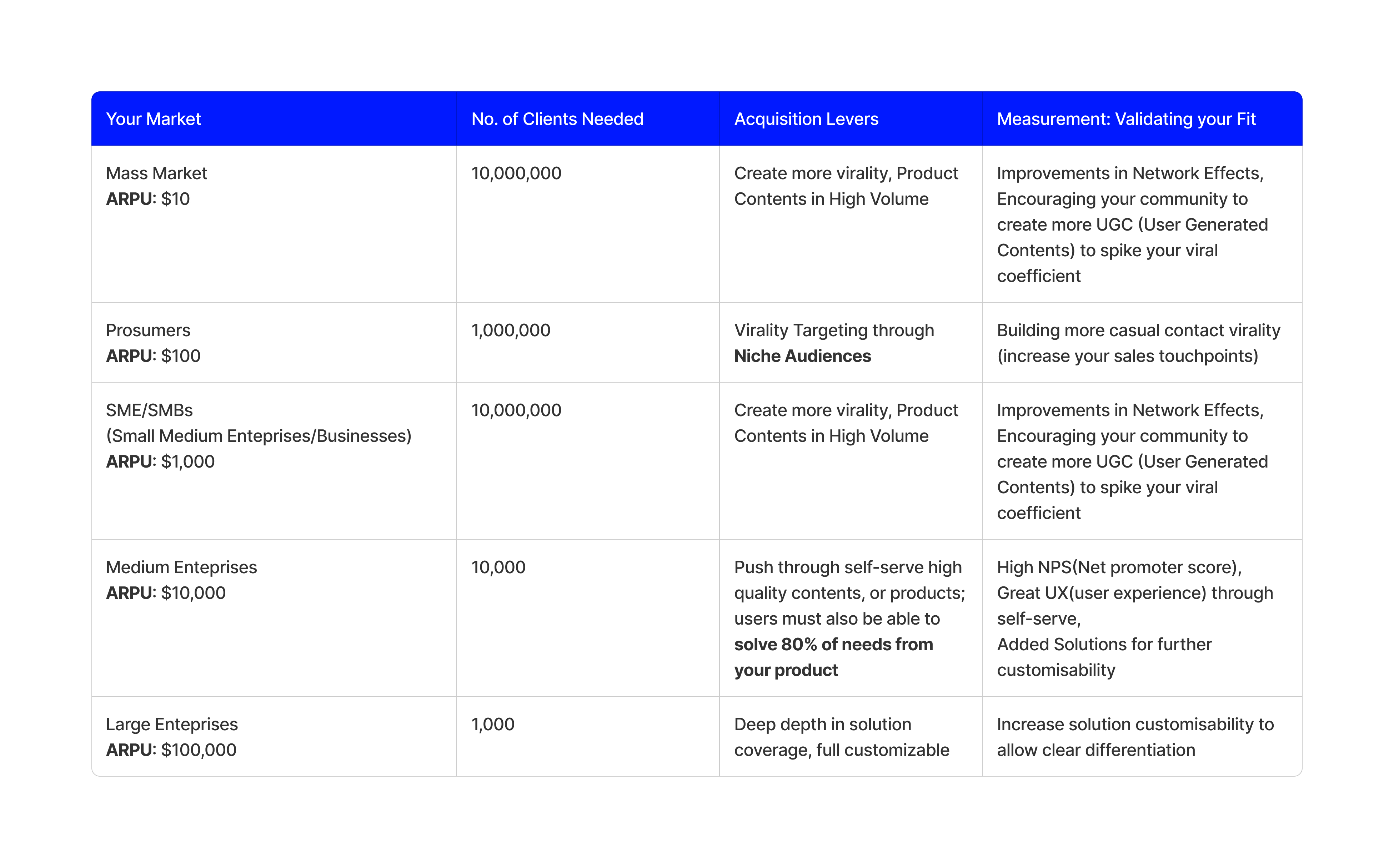
That sums up a quick run-down on your Market Sizing.
Structuring Your B2B Sales Process Effectively
Next in line, we'll map out the tools and tech stack you need for an effective sales process optimized to convert and expand leading B2B accounts in Singapore and your global audience in the coming years.
Note that we've created this guide especially for those concerned about "Expensive tools", we got you 👊🏻
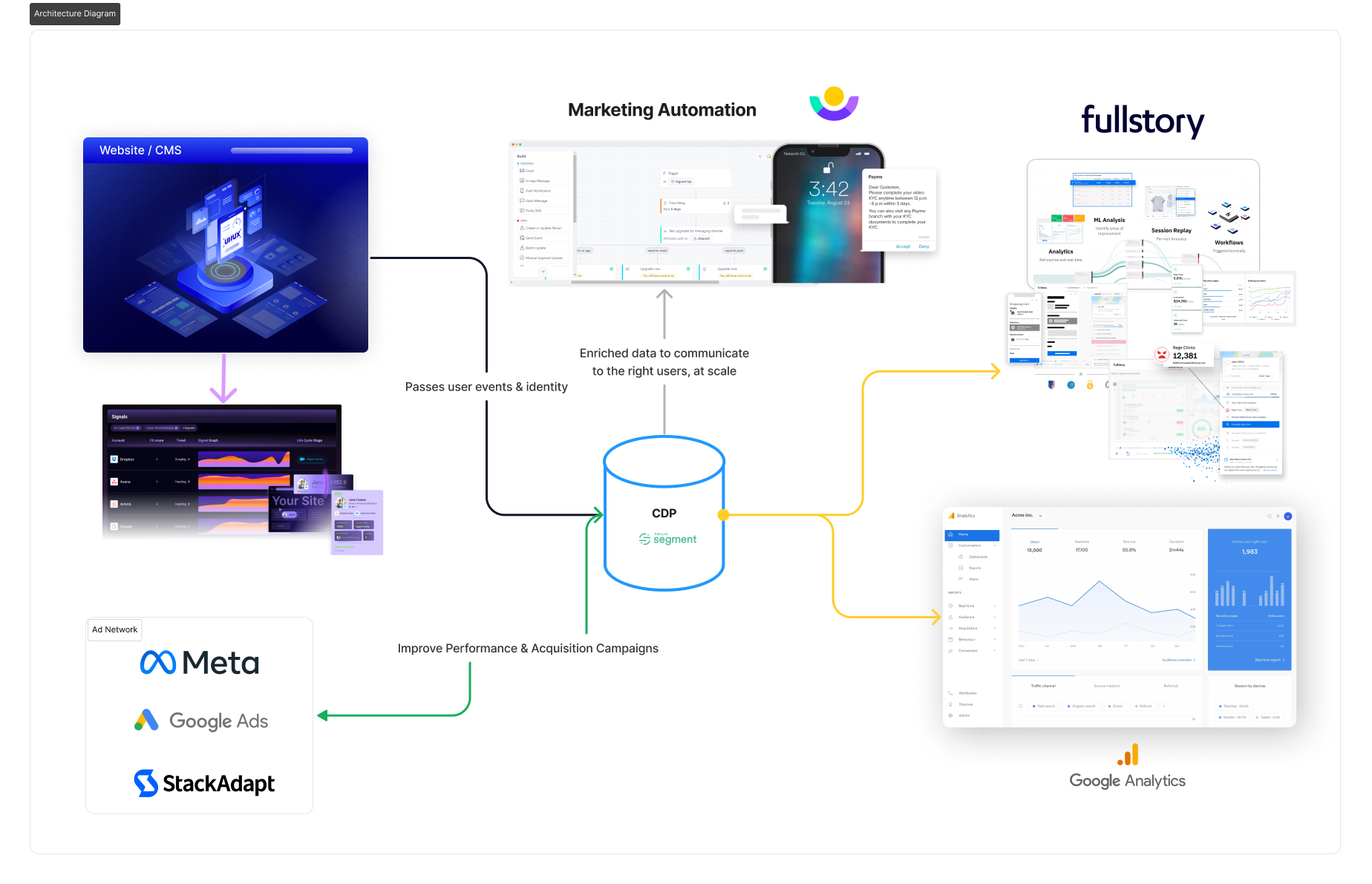
Here's a snapshot of the architecture diagram and links for you to get through startup programs, free tools and free credits in your initial years!
- Quickly learn Webflow and signup for their free plan
- Use Warmly.ai free plan to enrich your web visitors
- Segment Startup Program; signup here
- Fullstory Startup Program; Signup here
- Create your multi-channel outreach strategy with Lemlist
- Automate your nurturing with customer.io; signup for their startup program here
Choosing Your Go-To-Market Motion for Singapore B2B Success
For founders of high-growth Singapore software startups, the go-to-market (GTM) strategy profoundly impacts everything from product design to team structure.
Navigating the nuances between bottoms-up, middle-out and top-down models allows smarter resource allocation driving efficiency in the race to product-market fit.
Here's a quick evaluation run-down based on our thoughts ( best re-read once you've digested Unusual VC's Go to Market Motion contents below )
Weighing a Bottoms-Up vs Top-Down Approach
The bottoms-up GTM motion prioritizes rapid user acquisition over deal size. By offering freemium access or trial periods, products "sell themselves" enabling frictionless adoption.
Conversely, the top-down approach focuses sales efforts on securing large enterprise deals first. However, this could sacrifice critical user feedback and product-market validation early on.
Assessing the trade-offs allow founders to determine best-fit.
Evaluating Middle-Out as a Hybrid Model
The middle-out framework strikes a balance - combining self-serve adoption by department heads with enterprise-level pricing.
This allows both wide access and premium monetization simultaneously. However, product and positioning needs to resonate across user tiers.
For Singapore B2B startups, middle-out warrants close consideration.
Localizing Go-To-Market Strategies for Asia Nuances
As we've explored, GTM models offer distinct trade-offs between deal velocity, deal size and feedback loops.
Local founders must also account for Asian norms including relationship-based sales, tight budgets even among large firms, and preference for regional references.
While no panacea exits, contextualizing global best practices for Asia unlocks big upside.
Honorable mentioned and deep dives: Hubspot's Asia Sales Playbook and Unusual VC's Topical Guides on Go to Market Strategy
Here's the TLDR of what the playbook consists of:
Structuring your Sales Playbook with..
(If you're using AI to facilitate and co-strategise with you on this, we strongly recommend using claude)
- Company History & Mission: Summarize the role your company's Sales team plays to the growth of your business
- Team Structure: Explain the organization of your Sales department to have an overview of the Sales organization
- Target Market: Identify the locations or countries, buyer personas, the customer journey, and any omissions
- Tools and Software: Highlight the resources that your Sales team needs for success, or any tools you may need in the future
- Positioning: Speak to the market conditions, your business' value proposition, pricing strategy, and more
- Marketing Strategy: What should your Sales team know about Awareness, Demand, and Customer marketing efforts
- Prospecting Strategy: Steps your Sales team should take to qualify leads generated by marketing and the outreach process
- Action Plan: Outline the actions the Sales team will take in order to achieve the goals, from calls to target accounts
- Goals: What are your Sales targets and revenue targets?
- Budget: Outline the budget for your Sales initiatives
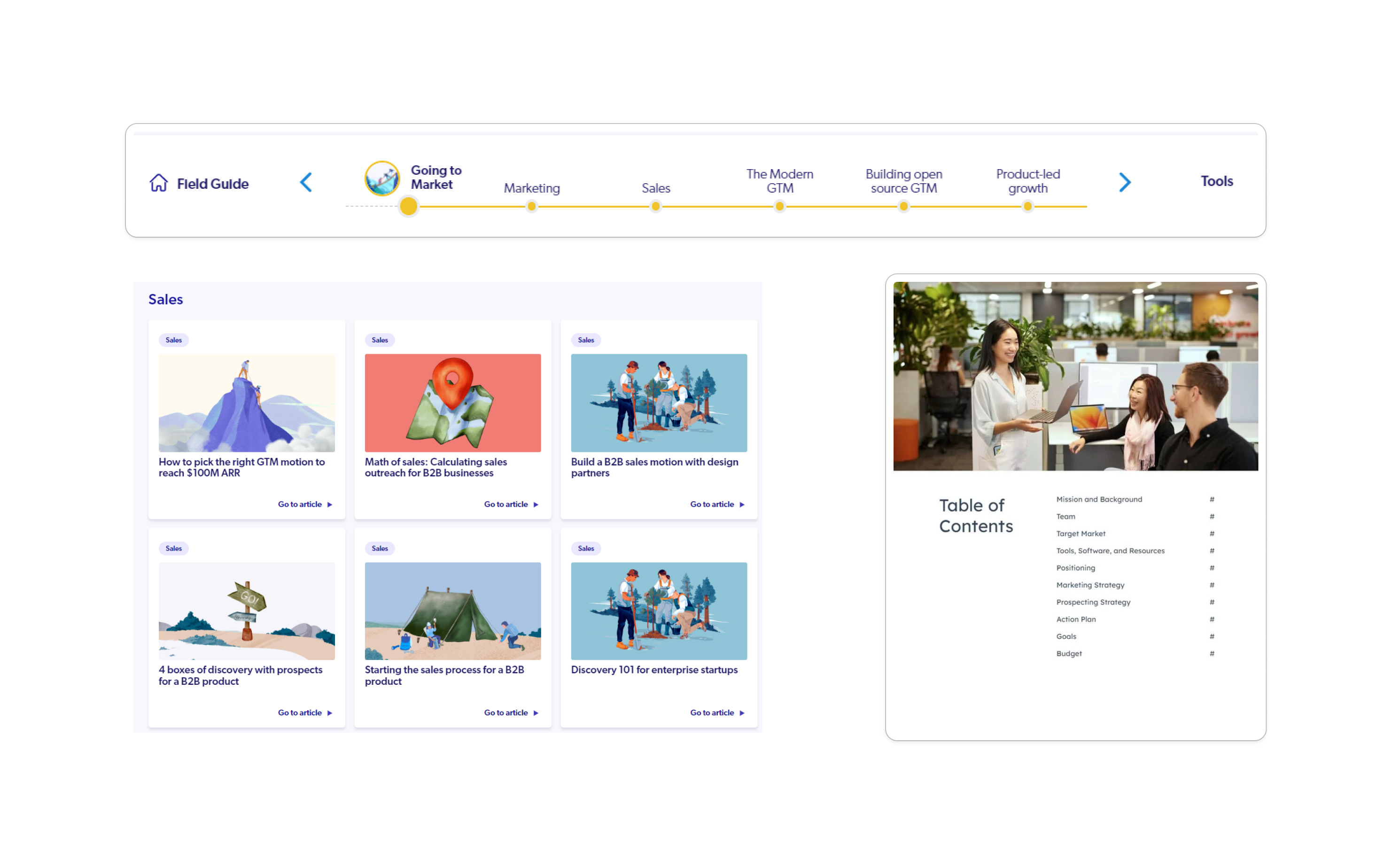
➡️Explore Unusual VC's Go to Market Content Series if you'd like to dive deeper: Read more here
➡️ Download HubSpot's Free Sales Playbook template for Asia here
Measuring & Monitoring Go-To-Market Effectiveness: Forecasting Growth and Revenue
We've saved the best for last. HERE's the true honorable mention from the team at Causal who've done an astounding job to help us founders forecast possibilities without hiring a CFO so early on. Please watch through Taimur Abdaal, Casual's CEO video on "Forecasting B2B SaaS Revenue
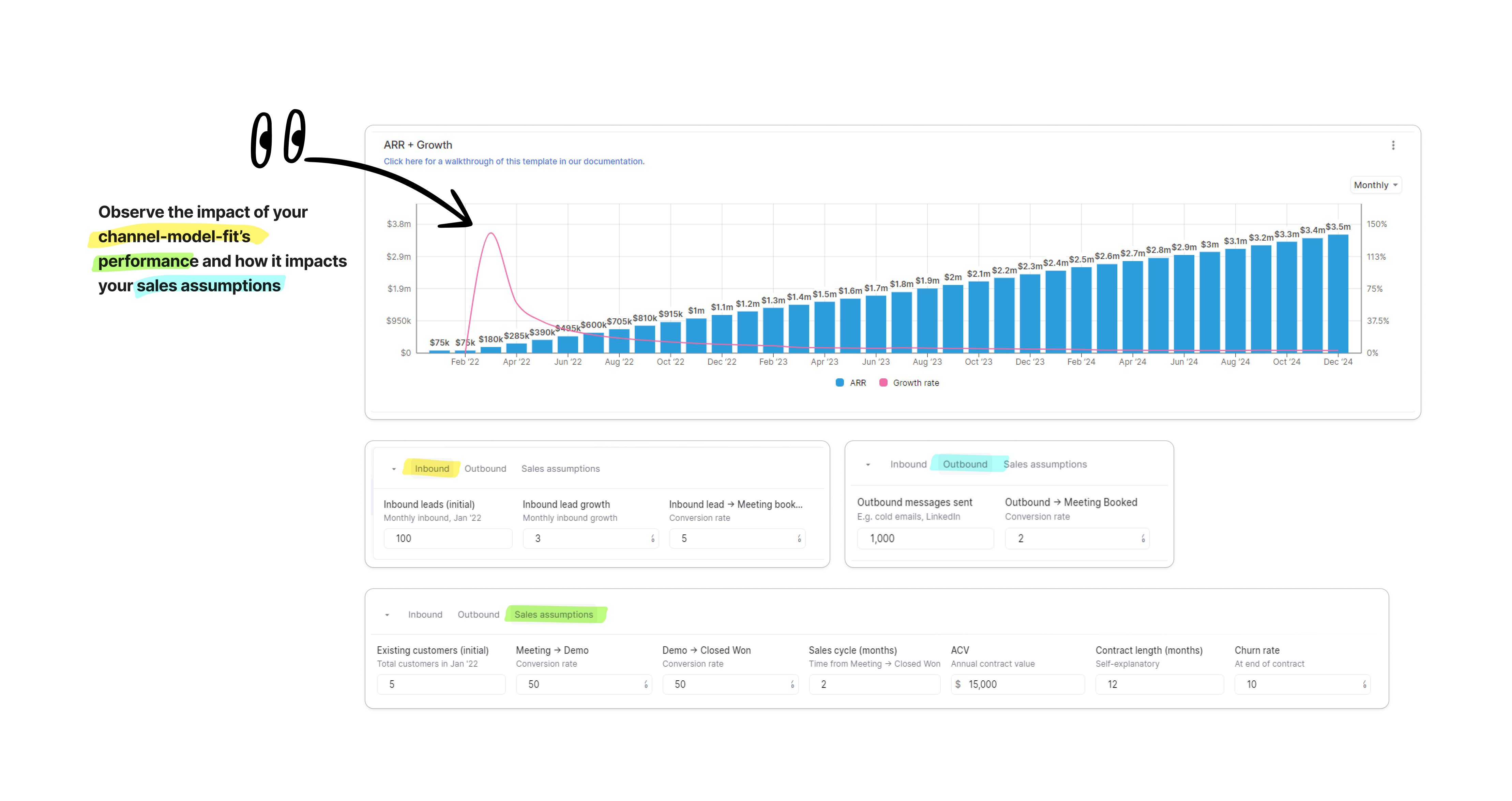
Watch the video here ↗️
With that - we're assuming that the we've provided points around: strategic go-to-market plans sculpted addressing factors from product-market fit to partnerships, prudent founders need data-backed mechanisms to model potential growth paths. We'd recommend you to try out their free plan, we've benefitted greatly from it and we're sure you will too!
Here's some further context on why Causal will help you validate your forecast
Casual's B2B SaaS revenue model provides founders a flexible template to quantify expected expansion by tuning key assumptions like:
- Sales cycle duration
- Deal conversion rates
- Churn ratios
- Average contract values
Allowing easy simulation of variables that profoundly impact top and bottom-line metrics over 3-5 year horizons.
For example, by factoring nuances of the Singapore enterprise sales landscape, founders can simulate trade-offs balancing channel partnerships with direct sales to double team growth.
Likewise, anticipating early retention challenges due to fragmentation allows baking in mitigation plans ahead rather than reacting post-facto.
By codifying assumptions into clear projections, founders maintain alignment on priorities fueling efficient execution even amidst uncertainty.
With credible growth modeling hardwiring realism into the blueprint, B2B startups equip themselves to systematically turn lofty ambitions intro reality.
Final Words of Guidance; hope this have been extremely insightful in your future plans in 2024
With thousands of words on architecting B2B success now consumed, we appreciate you sticking through this long yet imperative journey.
As we bring this comprehensive playbook to a close, two final recommendations merit mention should you seek hands-on help in bringing ideas to life or wish to subsidize execution costs levereging grants:
1. Collaborating for Rapid Validation and Launch
If your Singapore B2B startup already has well-defined go-to-market plans and momentum, collaborating directly with growth specialists like Devhaus can expedite product-market validation, technology building and secured first sales.
Our public sector track record and methodology blending strategy, development and commercialization unblocks obstacles at all stages to accelerate time-to-value.
Book in a discovery call o strategize your custom blueprint.
2. Funding Innovation Costs Through Startup SG Tech
For founders still finetuning ideas requiring R&D or prototyping, Startup SG Techs grants subsidizing up to 85% of proof-of-concept development costs serves as an invaluable ally.
Unlocking Up To $500K Innovation Grants from Startup SG Tech
For founders with cutting-edge R&D visions that could reshape industries, Startup SG Tech represents a golden ticket - providing up to 85% funding for proof-of-concept prototyping and validation.
With grants up to $500,000 per startup, successful applicants can leverage this fuel to transform bold ideas into reality.
But don't just take our word for it.
Browse approved sectors above like advanced manufacturing, biomedical devices or agritech and apply to convert bold visions into reality.
Startup SG Tech approved areas for POC projects:
- Advanced Manufacturing/Robotics
- Robotics, Industrial Internet-of-Things, Advanced Materials, VR/AR, Urban Mobility, Nanomaterials
- Biomedical Sciences and Healthcare
- Life Science Tools, Diagnostics, Medical Devices, Digital Health
- Clean Technology
- Water Technologies, Waster Management, Urban Sustainability, Sustainable Energy
- Information & Communications Tech
- 5G Networks, Artificial Intelligence, Cybersecurity
- New Industries
- Augmented/Virtual Reality, Blockchain, Space Tech, Quantum Tech
- Precision Engineering
- Silicon Photonics, Sensors/Actuators, Composites, Optics/Lasers
- Transport Engineering/Services
- Automation, Digital Twinning, Drilling/Testing Tech
- Food Science and Technology
- Food Packaging, Testing Kits, Processing Tech, Nutrition Products
- Agritech
- Urban Farming, Aquaculture, Livestock Tech, Environment Agriculture
With robust planning and financing support in place, the only missing link lies in determined execution - so waste no time in forging your path today!
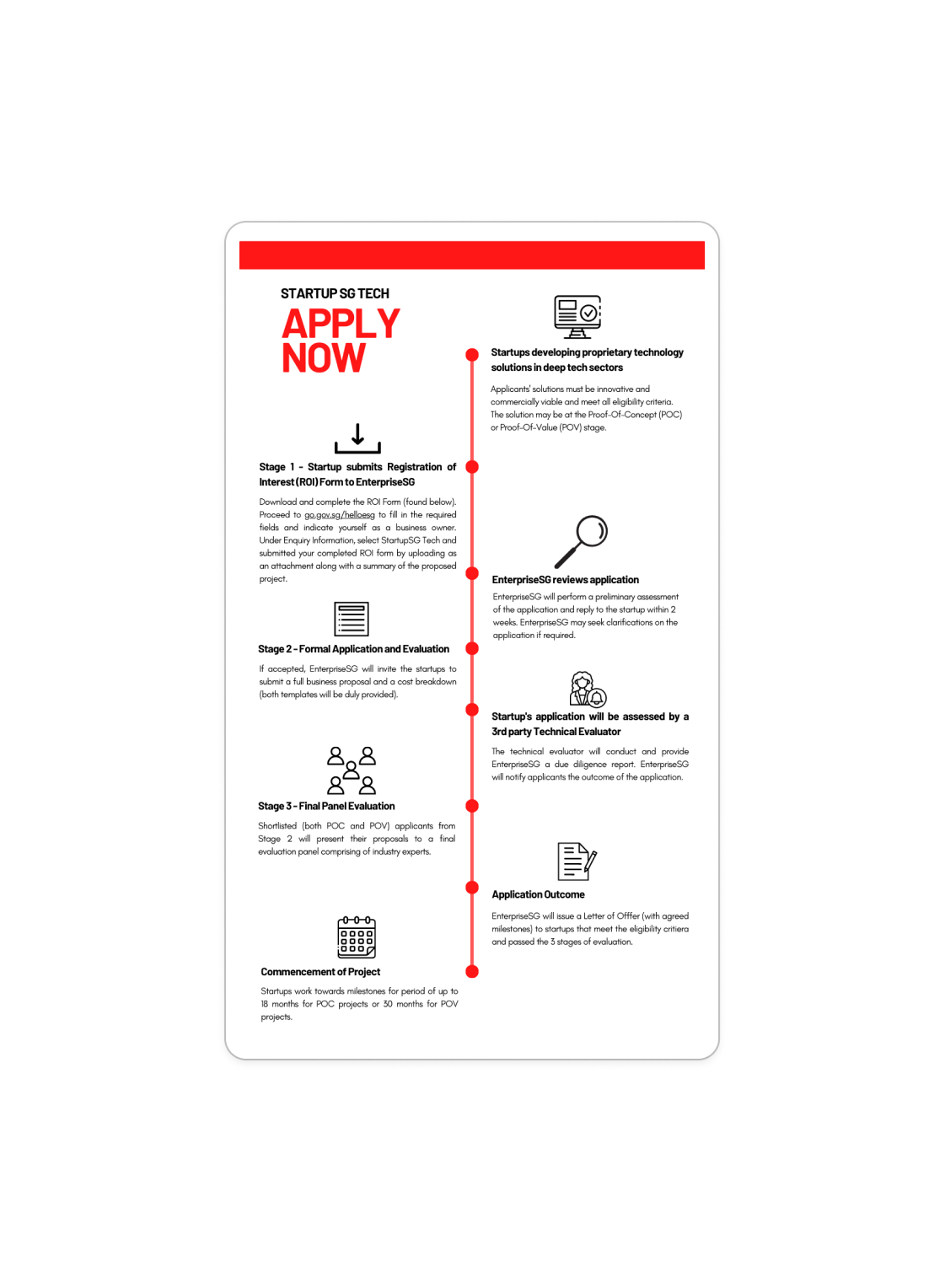
Here's a quick infographic to help you visualise the application process
Learn more about the application process directly from this link
Hope you loved the article! 😍 Don't forget to bookmark this page, you never know when you need to revisit it again!
P.s. if you'd like to explore more grants in Singapore - please visit our grants directory here.

Up to 50% Subsidisies on your next implementation strategy with us
For Companies registered and operating in Singapore, with up at least 30% local shareholding - leverage on the Enterprise Development (EDG) grants for your next; Strategy, Implementation or Enablement project with us at Devhaus!

Supporting Asia’s teams - from all shapes and size








Frequently Asked Questions
Here are some pointers, and a little - 'Quick bite-sized information'.
A: The choice depends on your current stage and specific needs:Alpha ($15K) - If you need to validate a new idea, conduct market research, or develop a go-to-market strategy before building anything
Beta ($25K+) - If you're ready to build an MVP, new website, or CMS with user-focused design and basic analytics
Gamma ($50K+) - If you have an existing system that needs growth acceleration, marketing automation, or enhanced analytics
Delta ($200K+) - If you're undertaking comprehensive digital transformation with legacy system modernization
Epsilon ($30K+) - If you have existing systems (preferably built by us) that need performance optimization and technical debt reductionNot sure? Book a free 30-minute consultation with Rohan (rohan@admiralsystems.io) to discuss your specific situation and get a tailored recommendation.
Our pricing is completely transparent with fixed-scope packages:
What's Included:
- Dedicated team of 3-5 specialists per engagement
- All deliverables listed in the engagement model
- Comprehensive enablement documentation
- Project management and regular progress reports
- Up to the maximum man-hours specified (200-1,200 hours depending on engagement)
No Hidden Costs Policy:As long as your project stays within the agreed scope and timeline, there are no additional charges
- All potential add-ons are clearly listed upfront with fixed pricing
- For Singapore companies: EDG grants can cover 50-70% of costs (we handle the entire grant process)
When Additional Costs Apply:
- Scope changes beyond the original engagement (requires new engagement purchase)
- Client-caused delays that exceed allocated man-hours
- Optional add-ons you specifically request
Each engagement has a defined maximum timeline:
- Alpha: 2-8 weeks (200 hours)
- Beta: 8-12 weeks (280-500 hours)
- Gamma: 16-20 weeks (700 hours)
- Delta: 26-52 weeks (1,200 hours)
- Epsilon: 6-10 weeks (300 hours)
- Project Delays: We build buffer time into our estimates to account for normal client feedback cycles
( If delays are caused by our team, we absorb the additional costsIf delays are client-caused and exceed our allocated man-hours, additional charges may apply at our standard hourly ratesWe provide weekly progress reports so you always know where we stand)
- Acceleration Options: Rush delivery available with 50% surcharge for urgent needs
We can often compress timelines by adding additional team members! If you have your own development team, we're more than happy to take it up to hi-fi prototyping so it'll be a ton less work for your Dev team!
We can only guide you through it - having said that, we're experienced grant partners and handle the entire process:
Grant Coverage:
- Singapore SMEs: Up to 50% of project costs covered
- Sustainability projects: Up to 70% coverage (until March 2026)
- Our services align with multiple EDG categories: Business Strategy Development, Financial Management, Human Capital Development, and Strategic Brand & Marketing Development
Our Grant Process:
Partner Network: We work with Real Inbound Consulting (certified TR 43/SS 680) for grant administration
Full Service: Application preparation, document submission, project management, audit support, and claims processing
Administration Fees: $7,800-$15,000 depending on project size (much less than the grant savings)
Success Rate: High approval rate based on our experience with 50+ grant applications
Eligibility Requirements:
- Singapore-registered company30%+ local equity held by citizens/PRs
- Financially stable to complete the project
- Project hasn't commenced before application
Timeline: Grant approval typically takes 4-6 weeks before project commencement.
We offer multiple post-engagement options:
Immediate Post-Completion:
- 30-day warranty period for any bugs or issues
- Complete handover documentation and training
- Knowledge transfer to your internal team
Ongoing Support Plans:
Starting from
Basic ($5K/year): 40 hours, bi-annual check-ins, basic troubleshooting
Advanced ($10K/year): 80 hours, quarterly check-ins, strategy sessions
Premium ($20K/year): 120 hours, monthly check-ins, dedicated account manager
Growth & Evolution:New Requirements: Purchase additional engagement models for new projects
System Expansion: Beta → Gamma → Delta progression path available
Continuous Optimization: Epsilon engagements for ongoing performance improvements
Key Principle: Support covers maintenance and optimization of existing systems, but new features or integrations require new engagement models to ensure proper scoping and quality.
Key differentiators set us apart:
1. Asian Market Expertise:
- First Webflow Enterprise partner in Asia
- Deep understanding of Singapore, Hong Kong, and Indonesian markets
- Multi-language, multi-currency, cross-border commerce experience
2. Comprehensive MarTech Integration:
- Partners with 15+ best-in-class platforms (Segment, Customer.io, Fullstory, etc.)
- End-to-end data pipeline orchestration (not just point solutions)
- Unified dashboard approach preventing "tool sprawl"
3. Award-Winning Creative + Technical Team:
- 2024 Fullstory Service Partner Award winner (APAC)
- Design team that creates "jaw-dropping creatives" alongside technical implementation for your analytics
- Creative-technical convergence in every project
