
What Is a Customer Data Platform?
Quick answer
A customer data platform (CDP) is a single source of truth for customer data: it collects first-party data from every source you use, unifies it into one detailed profile per customer, and makes that profile available across your channels in real time. Teams use it to identify and target customers by interest, behavior and location instead of piecing together siloed datasets.
Key takeaways
- A CDP is a single source of truth for customer data - everything is ingested into it first, then shared out to the other platforms your teams use.
- It captures the whole customer journey, from the first product search to the completed purchase, and enriches it with data from support, marketing and invoicing systems.
- The more you know about your best customers, the easier lookalike modeling becomes for finding and targeting similar people.
- The headline benefits are an enhanced customer experience, improved return on ad spend, and a holistic understanding of customer behavior for decision-making.
- A CDP is built for marketing and unifies first-party data for campaigns; CRM solutions are built for sales. They solve different problems.
- Engineering teams benefit too: a CDP simplifies data collection, reduces time spent shipping data around, and supports building data-driven products and features.
- Without one, data silos produce incomplete and inconsistent datasets, and audiences built on third-party tools are hit or miss.
Customerdata platforms have become a hot topic. They're the latest method for gathering data about customers and using that information to make decisions that improve how businesses interact with their audience.
But what exactly is CDP? How does it work? And why do you need one?
In this guide, we'll explain everything you need to know.
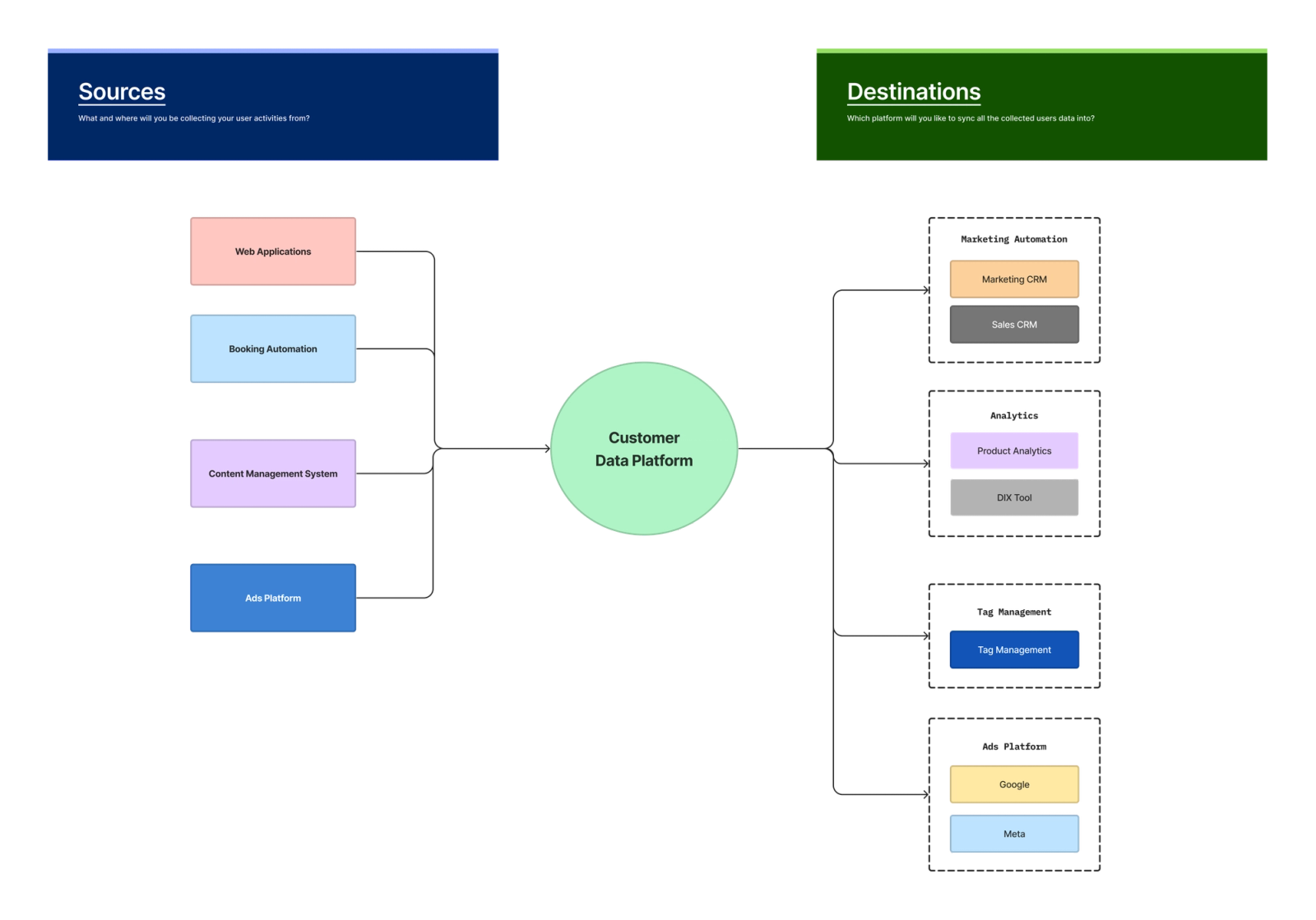
If you're not sure what type of information your company collects on customers--and where it lives--it may be time to consider implementing a CDP.
A customer data platform is a single source of truth for customer data. It can identify and target customers based on their interests, behaviours, location and more.
With an integrated CDP, you can consolidate customer data from multiple sources into one place so that you can quickly access the information you need to make decisions about your customers. This will help ensure that all of your marketing efforts are aligned with the right targets.
Understanding how does a CDP work?
The role of customer data platforms (CDPs) is to collect lots of data about customers who do business with a company, create a detailed image of the customer, and deliver effective, personalized communication across all channels.
Why is it important to gather so much information about the user in the first place?
Simply because the more you know about your “perfect” customer, the easier it will be for you to implement lookalike modelling to find similar people you can target your marketing to.
In other words, the more information you have about them, the better your chances are at reaching out to similar individuals who are likely to respond favourably to your product or service.
Let’s take a look at an example...
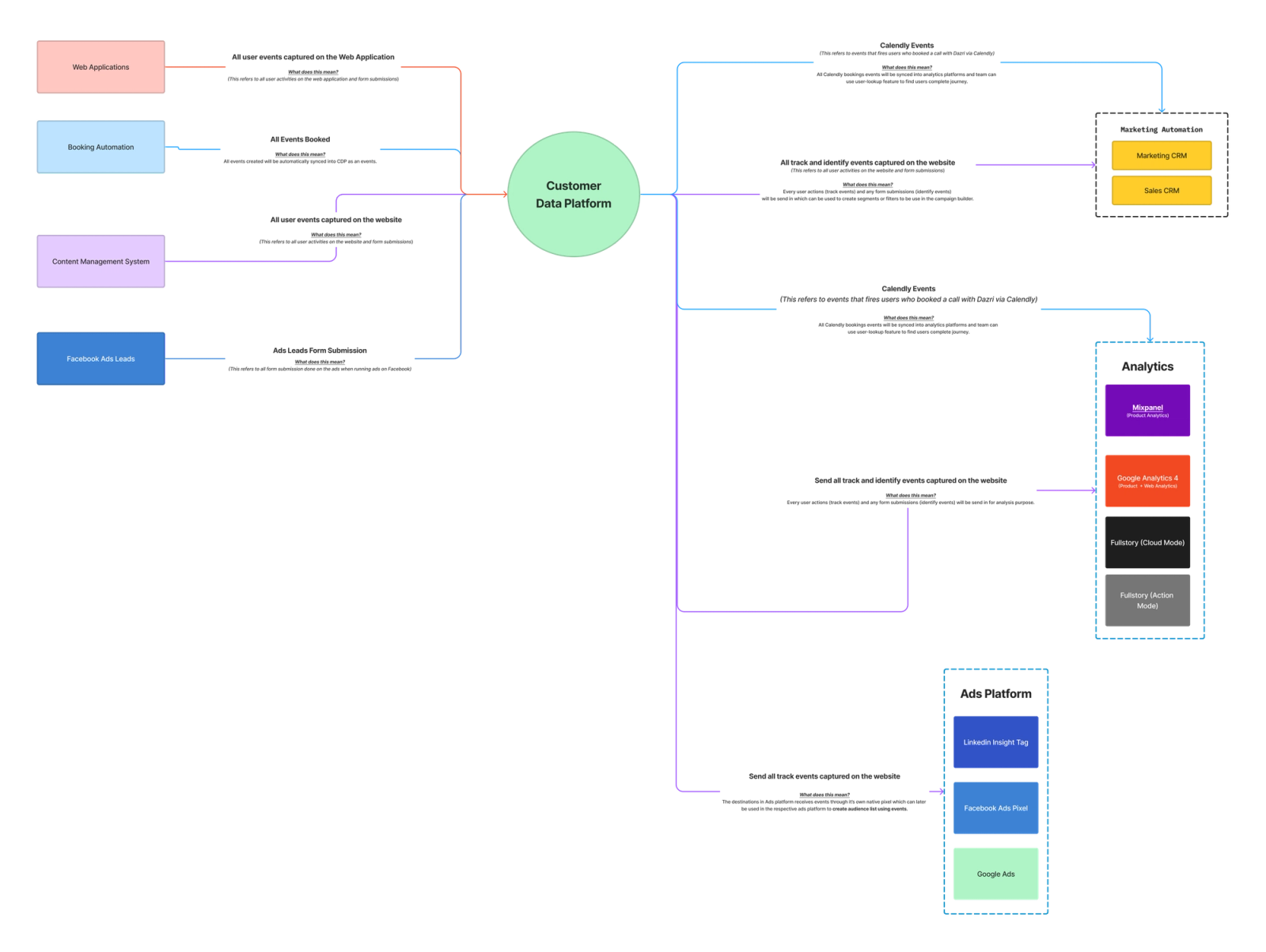
In the example above, the image illustrates how a team develops its 1st-party data strategy by incorporating a Customer Data Platform.
With a CDP in place, the team can easily connect multiple sources of data and streamlined all customer data and key user actions that can be shared into other platforms for the team to use the data for a better and clearer product analysis or even build better ads audience list.
Thus, a CDP becomes a single source of truth since all data are ingested into it first.
Why do you need a CDP?

These days, it is possible to capture all the data about a customer’s journey from the moment they search for a product, to when they make a purchase. This means you can see what products they were looking for, what products they clicked on and ignored, and even which products they ultimately purchased.
You can also enrich this dataset with data from every touchpoint your business has with customers—from customer support and management systems to marketing platforms and invoice management products.
This rich dataset enables new use cases for enterprises beyond traditional reporting.
Some of the key benefits that you'll able to achieve with a CDP in your system:
- Enhanced Customer Experience: By leveraging a CDP, businesses can tailor their interactions to meet the specific needs and preferences of individual customers, thereby improving overall customer satisfaction.
- Improved Marketing Return on Ad Spend (ROAS): The insights derived from a CDP empower marketing teams to optimize their strategies, ensuring that resources are allocated efficiently and delivering a higher return on investment.
- Holistic Customer Understanding: A CDP provides a unified view of customer data, allowing businesses to gain a comprehensive understanding of customer behavior, preferences, and interactions. This consolidated information facilitates informed decision-making and strategic planning.
Who uses CDPs?
CDPs are built to help business to drive their growth to a whole new level in today's highly competitive space but do you know which teams in the company will utilise it and make an impact on the company's performance?
Let's dive into it and discover some of the teams that will be fully utilising a CDP.
CDPs for Growth and Marketing Team

A CDP is designed for marketing. It collects and unifies first-party customer data—from multiple sources—to build a single, coherent, complete view of each customer and then makes that data available to marketers to create targeted and personalized marketing campaigns. CRM solutions are designed for sales.
A CDP is often the first step in a customer journey that starts with prospecting and leads to engagement, retention, advocacy, and loyalty. When companies think about their customers as individuals who want more than just products or services, they can create an experience that makes customers feel special.
Marketing teams need a CDP to be successful because it provides them with the right data at the right time so they can do their jobs well. If you're not using one yet, check out our guide on how to get started with a CDP!
Here are some of the ways that marketers use CDPs:
- Collecting Customer Information: CDPs streamline the process of gathering customer information from diverse sources, creating a consolidated database for comprehensive insights.
- 360-Degree Real-Time Customer View: Marketers benefit from a holistic and real-time understanding of customers, facilitating informed decision-making and personalized interactions.
- Targeted Campaigns Based on Customer Profiles: Armed with individual customer profiles, marketers can design targeted campaigns for enhanced performance, aligning marketing strategies with customer preferences for a more impactful reach.
CDPs for Engineering Team

Customer Data Platforms (CDPs) are a powerful tool for enabling data-driven feature development, but they can also be used to simplify data collection and analysis. Learn how CDPs fit into your engineering workflow and improve your product development process.
Here are some of the ways that engineering teams use CDPs:
- Customer Data Infrastructure for Efficiency: CDPs serve as a foundational element in constructing a robust customer data infrastructure, offering an effective pathway to overcome data inefficiencies. By consolidating and organizing customer data, engineering teams can streamline processes and ensure a more efficient utilization of data resources.
- Simplified Data Collection: CDPs simplify the intricate task of data collection, providing engineering teams with a centralized platform to gather and manage customer data. This simplification not only enhances operational efficiency but also contributes to the overall effectiveness of data-driven initiatives.
- Reduced Data Shipping Time: With CDPs in place, engineering teams can spend less time on the logistics of shipping and managing data. This reduction in data shipping time allows for a more agile and responsive approach to handling data, fostering quicker decision-making and product development cycles.
- Building Data-Driven Products and Features: The integration of CDPs into the engineering workflow facilitates the development of products and features informed by real-time, comprehensive customer insights. This data-driven approach empowers engineering teams to align their efforts with customer needs, resulting in the creation of more impactful and relevant solutions.
Here’s an overview of how Admiral Systems uses Segment as our main Customer Data Platform
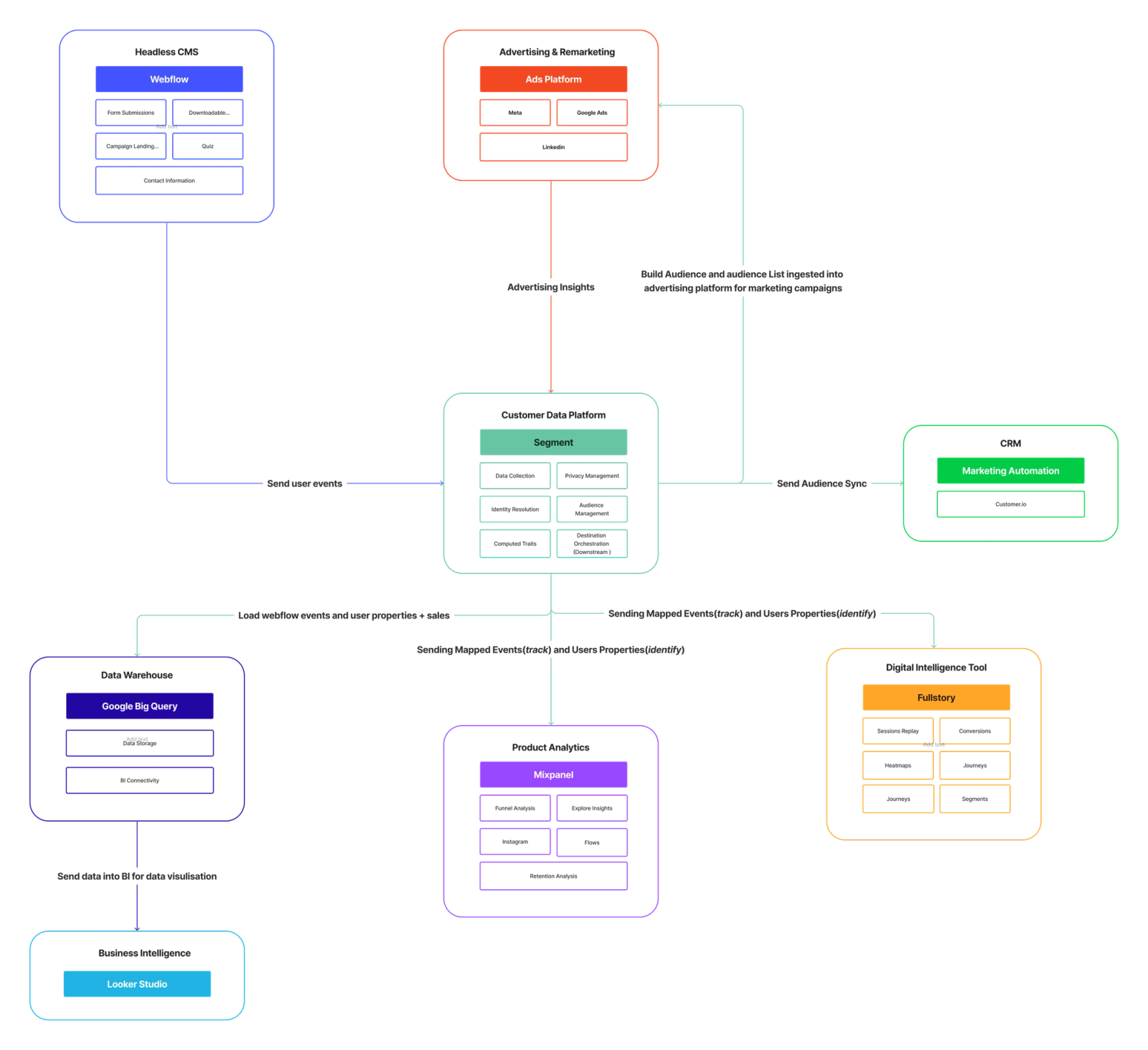
Why did our team decide to have CDP in our architecture?
We've all been there: you're trying to create a perfect digital architecture and are finding it difficult to get a single source of truth for all the data collected across all channels and platforms.
With that in mind, we want to share with you some of the pain points we've experienced without having CDP integrated into our architecture.
- Data silos cause incomplete data sets and inconsistency in the data. This is because data gets stored on different channels and platforms, which makes it hard to determine what's accurate and what isn't.
- Quality of audience build based on 3rd party tools is hit or miss when running campaigns; this is because audiences are built on 3rd party tools which don't always have accurate information about your customers.
Is instrumenting CDP difficult?

We get it.
Learning and adopting new software tools can be overwhelming, and not everyone has the luxury of time to spend on learning it. But your business is growing, your team is getting bigger, and you need to hit those KPIs for the quarter!
You're right—you shouldn't have to spend time learning how to instrument a Customer Data Platform (CDP), or even come up with a bespoke 1st-party data strategy for your business. So why should you?
We feel your pain, and we've got a solution: engage with Admiral Systems, an agency that is capable of instrumenting the entire CDP, setup and integrating multiple systems to build a hypergrowth architecture and strategies for 1st-party data strategy specifically for your business.
Our team of solution architects and engineers are Segment certified and have supported our clients in developing these solutions for them.
A CDP is a powerful new way to gather and use data to understand your customers better.
It combines the best features of other analytics tools, with the ability to mine your CRM data for deeper insights into who those customers are and what they want. CDP helps you to use information across all channels in real time without any manual work.
Unsure where to start? Fret not, Admiral Systems got you!

Admiral Systems is a digital transformation agency that helps our customers stay center stage in their markets with the latest technology trends. Our team combines years of expertise, industry-leading applied technologies, and a crystal clear vision of where we are headed tomorrow.
No matter what challenge your organization faces, we have the right solution — today.
Architecture Strategy & System Integration
Innovative solutions tailored to each of the customer's unique needs will be dedicated to helping your customers reach their goals.
If this resonates with you, let's work together:
- You need a new pair of eyes to assess and audit the existing systems in your business and revamp where needed to meet today's business needs.
- You need an architecture strategy to develop a clear plan for data collection and an event tracking plan for a better visual of key insights on your customers.
- You need to integrate multiple software tools to automate business processes and maintain the efficiency of the system regularly.
Not sure where to start? A Sandbox is a one-week paid proof that scopes your customer-data setup on your own systems, and credits in full towards a Blueprint if you continue.
Frequently asked questions

Up to 50% Subsidisies on your next implementation strategy with us
For Companies registered and operating in Singapore, with up at least 30% local shareholding - leverage on the Enterprise Development (EDG) grants for your next; Strategy, Implementation or Enablement project with us at Admiral Systems!

Supporting Asia’s teams - from all shapes and size


Frequently Asked Questions
Here's us unfolding the stories you'd be asking in your heads or over water cooler conversations with your peers.
